STUCCO SCOPE ITEMS
STUCCO – FIELD & QC ITEMS
DRYWALL SCOPE ITEMS
DRYWALL – FIELD & QC ITEMS
PAINTING SCOPE ITEMS
PAINTING – FIELD & QC ITEMS
MARBLE AND TILE SCOPE ITEMS
COUNTERTOPS SCOPE & QC ITEMS
STUCCO SCOPE ITEMS
- Avoid use of metal accessories; use PVC or just tooled joints
- Buy drip edge at window heads and underside of balconies.
- Preference is drip edge in the structural level as it allows for stucco skim coat or painting of underside of balcony and not full stucco system
- Avoid bonding agents. If specified on the project, be sure to involve the stucco contractor and appropriate manufacturers.
- If cementitious waterproofing is specified on the exterior face of CMU, be sure to buy Acryl 60 with waterproofing sub and with stucco subcontractor. Get verification of compatibility from all manufacturers, include this on mock-up wall.
- Include come-back work at buck hoist locations, and pour strips if applicable.
- Coordinate if framing/drywall subcontractor or stucco subcontractor has the exterior metal framing. Pay close attention to infill soffit framing based on truss spacing and detail (high-rib lath).
- Stucco that is installed over exterior framed wall assemblies requires two weather barriers and a means for drainage. This is typically accomplished by using Tyvek as the primary and paper back lath as the secondary weather barriers. A PVC weep screed or flashing is used as the means of drainage and is installed prior to the Tyvek.
- Clarify if underside of balconies receive stucco; 3/8” skim coat is typical.
- Clarify the texture required. Avoid smooth finish due to difficulty of quality control, and it’s more expensive. Do a mock-up for approval. This is typically addressed in precon and owner Q&A, but be sure to clarify before awarding subcontract.
- Clarify location of stucco control joints with Architect, both horizontal and vertical, as well as use of an accessory, or tooled joint. The mesh used between concrete and CMU does not prevent cracking. See ASTM C926 for more on this subject.
- Evaluate use of swing stage, scaffold, mast climbers, or combination of all. Does painter, precast, waterproofing, etc subcontractors own their own? Stucco cure time for proper pH is about 3 to 5 days even with the hot primers.
- Density of foam?
- Soffit venting?
- Review all foam shapes installed on the exterior over stucco. The best method is to adhere the foam shapes prior to paint to the brown coat of stucco, and embed the raw foam shapes in cementitious base coat and detail mesh back to the brown coat.
- Foam shapes should include a 6:12 slope on the top surface.
- If the foam shapes are not detailed back to the wall but only back wrapped to the brown coat a sealant joint will be required at the top of the shape where it meets the stucco. A paintable sealant joint, with a 10 year weatherseal warranty, should be applied at the interface of the shape to the stucco.
STUCCO – FIELD & QC ITEMS
- Common condominium deficiency is the thickness of stucco not being within acceptable standards. Periodic testing can be performed during installation to verify proper thickness. Do not allow stucco to be built out to correct masonry and concrete imperfections.
- Do mock-up to establish level of quality.
- Ensure that all glass, frames, balcony rail, vents, etc. are properly protected. KAST Superintendent to be notified immediately of any damage. This way it can be fixed with swing stage/scaffold still in place, and not wind up on the punch list at a time when we have no access.
DRYWALL SCOPE ITEMS
- Include drywall subcontractor to layout demising walls and walls with MEP sleeves on first elevated deck with units/rooms, and non-typical decks thereafter as needed and permitted by budget.
- Clarify finish on exposed concrete ceilings in units. Woncote and Covercoat (by USG) are smooth finish options, knockdown texture is more economical.
- Confirm drywall sub understands concrete ceilings will be provided within ACI tolerances. Buy proper prep and base coat of concrete ceilings by drywall subcontractor. Buy reasonable alignment work required for the proper application of ceiling finish (correction of deflections greater than ¼”, grinding of form joints, removal of all nails and metal strapping by others).
- If ceilings are not exposed concrete and are scheduled to receive 7/8” hat channel, be sure to ‘close’ the gap between ACI tolerances (up to 83’-4” the tolerance is +/- 1”), and gypsum wallboard industry standard tolerances (ASTM and GA, which are ¼” in 10’ for walls and ceilings; see attached Figure 9-2).
- Verify shaft locations and fire rating requirements with MEP drawings and wall types on Architectural.
- Include 1-5/8” framing at masonry and concrete walls.
- Get price for Mold Tough drywall on lower levels where drywall will be installed prior to roof dry-in and complete installation of all windows.
- Verify demising wall details and UL assembly to be provided.
- **If using resilient channel, be sure to read and understand the installation instructions. For the assembly to be effective, the channel must be fastened to the studs, and the drywall must be fastened to the channel only (not the studs).
- Verify walls to receive insulation. Demising walls are typically clear, the interior unit partitions are typically unclear.
- Use fi-foil insulation 4.1 or 4.2 depending on energy calculations. Do not use spray on cellulose insulation on exterior walls. If the wall gets wet, the material acts as a sponge.
- Review MEP plans to identify pipes greater than 3” in 3-5/8” walls. Check pipe insulation as well. A 3” pipe will not fit in a 3-5/8” wall (3-1/2” OD, plus fittings).
- Verify insulation of walls and slabs between garage (unconditioned) and air conditioned space.
- Coordinate drop ceilings and soffits in units with ductwork, fire protection, and plumbing.
- Drywall finish to be level 4 unless specified otherwise. If a level 5 is specified, suggested product is Tuff Hide (spray on application) in lieu of a true level 5.
- Other options for level 5 finish include the use of skim coated drywall Continental Rapid Deco Level 5.
- Include come back trips at buck hoist or temporary openings left in demising walls.
- Include rippers as needed for installation of ductwork and fire protection rough.
- Verify drywall fits in buck hoist.
- Verify shower curbs, may be metal framing or concrete. Include 6” flat gauge metal backing at the base of shower framing so shower pan has proper backing.
- Ensure slight slope in framing or concrete curb back to shower
- Drywall subcontractor to protect and properly store drywall prior to installation. This includes dunnage and visqueen, make subcontractor responsible for any water damage or mildew damage prior to installation resulting from improper storage.
- Verify if the Architect’s dimensions are framing dimensions or finish dimensions. In a condominium, this could affect the sales contracts the Developer has with their buyers. Be sure to verify allowable tolerances to prevent any issues after the condo surveys are performed.
- Include multiple punch list operations as required by Owner Agreement.
- Buy all required backing; including backing for future grab bars, cabinets, shower enclosures, bath accessories, wall mounted TV’s or other elements, ceiling mounted elements, etc.
- All backing/blocking used behind walls shall be fire rated.
- Verify location of any tub/shower niches.
- Buy all mold resistant drywall for the entire bathroom, including the ceiling. For wet walls (i.e. 3 sides of the tub, shower wall areas, tub decks, etc.) install a tile backer board suitable for “wet areas”. Determine if project requirements necessitate waterproofing of the tile backer board or if water resistant product is acceptable
- Nation Gypsum eXP Tile Backer Board & Georgia Pacific Denshield Tile backer have an integral water barrier.
- Follow manufacture requirements for treatment of fastener heads, seams, and terminations.
- USG Fiberrock AquaTough, National Gypsum PermaBase Cement board, and USG Durrock are moisture resistant. If a water barrier is required consider a liquid applied water barrier such as Laticrete Hydro Ban or Aqua Defense by Mapei
- Follow manufacture requirements for treatment of fastener heads, seams, and terminations.
DRYWALL – FIELD & QC ITEMS
- Verify that all drywall assemblies are in full conformance with UL assemblies. This is a common deficiency with condominium 558 inspectors.
- Incorrect gauge of studs is a common issue, be sure to verify.
- Coordinate unit mechanical closet and appliance closets with required equipment. Verify all necessary clearances and required functionality. Typical split system AHU requires 4” clear on all sides. Allow 4” to 5” for dryer exhaust. Dryer vent boxes are best approach.
- Verify mold resistant drywall and tile backer board locations. Extend 6” past edge of shower or tub enclosures.
- For long exposure locations (i.e. electrical rooms, HVAC shafts, etc.) by long exposure glass mat drywall board.
- Verify all door rough opening requirements from door supplier, and formally transmit to framing and drywall subcontractor.
- Check returns at all door openings for reveal. Verify casing size. There are always conditions where casing greater than 2” will not fit.
- Verify knee walls are framed to proper height (and length if applicable).
- Verify if bath accessories are recessed.
- Verify rough opening for fire extinguisher and fire hose valve cabinets. To reduce cost, fire cabinets are typically not purchased, drywall subcontractor to 5-side back of cabinet.
- Verify actual dimensions and heights for tub decks. Coordinate with tub spec (drop-in or undermount), and allow for finished floor/wall material along with plywood, tile backer board, etc. Provide access panel for Jacuzzi tubs.
- Tub decks typically require structural support under the tile backer board (i.e. plywood), review requirements with tile backer board product manufacturer and design team.
- Coordinate all layout and framing with cabinet shop drawings.
- Perform pre-drywall walk-through with all applicable subcontractors. Make them sign the KAST pre-drywall subcontractor checklists.
PAINTING SCOPE ITEMS
- If not specified, buy system with 10 year manufacturer’s warranty or greater. Verify with Architect and write contract around mil thickness of paint.
- Modac is a great primer, it passes the ASTM test required to be classified as a waterproofing product.
- One coat of Sherwin Williams A100 acrylic over one coat of Modac will provide a 7-year warranty. Two coats of Modac will provide a 5-year waterproofing warranty.
- Sherwin Williams Loxon XP system (prime and two coats) is the best system where budget allows (highly recommended on condominiums). Hot primer allows for application over stucco with pH as high as 13 (typical requirement is between 6 and 9, but verify with manufacturer and warranty requirements). System keeps water out, but allows the masonry structure to release moisture vapors without interfering with the adhesion and the performance of the coating.
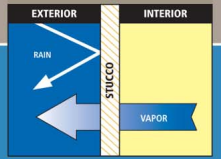
- Elastomeric paint is no longer used because it traps the water from the stucco and block, causing the paint to bubble.
- If condominium, verify if units will receive crown molding.
- Coordinate who primes running and standing trim (painter or buy pre-primed from trim supplier). Preference is to buy running and standing trim pre-primed. Wood doors primed by painter.
- Clarify if stairwell and garage concrete/masonry get painted.
- Clarify if garage exposed piping gets painted.
- Verify if miscellaneous metals (stair railing, louvers, trellises, etc) are pre-primed steel, or pre-finished aluminum.
- Trash rooms (especially condos) should receive epoxy paint on floors and walls.
- Clarify if exposed concrete floors receive special sealer or paint.
- Include separate, dedicated punch list crew.
- Buy painting of tops and bottoms of doors.
- If buying finish/beauty sealant bead on windows and sliders from painter, buy Dow CCS or Dow 790 (20 year weatherseal warranty) . Silicone can’t be painted.
- Buy painting of rooftop elements, ductwork, etc. especially if project is located in a coastal environment.
PAINTING – FIELD & QC ITEMS
- Protection of overspray of exterior paint on cars and adjacent property.
- Verify that substrate is acceptable and has been accepted by painter.
- Verify that sprinkler heads are protected prior to painting.
- Verify that no raw wood is exposed.
- Verify pH tests of stucco prior to painting.
- Verify applied mil thickness of all applied exterior paint systems
MARBLE AND TILE SCOPE ITEMS
- Buy pre-float under the shower pan.
- On post tension slabs, deflection is typical. Buy floor prep, or include an allowance for 25% of floor area to be floated.
- Get a letter from the flooring material manufacturer that indicates their products are compatible with the curing compound used on the elevated slabs.
- Does flooring material get installed under cabinets? At a minimum, buy installation past toe kick by 6”.
- Typical marble floor installation is 2”. Be sure to account for this when calculating FHA compliance for outlet and thermostat heights, along with 34” vanity height. Outlets in 4” vanity backsplashes can be problematic.
- Porcelain tile material shall be rectified and gauged. If not, this will increase the likelihood for lippage and a larger grout joint may be required.
- Consider using tile clip system to eliminate lippage and help with installation so tile is installed flat
- Grout joints shall be per the manufacturer’s recommendation.
- Verify that underlayment and overall assembly meets STC and IIC code requirements (50, or 45 if field tested).
- Verify that coefficients of friction comply with all codes, AHJ, Health Department, etc.
- All tile to be from same dye lot, including attic stock.
- Verify threshold material. In residential units where FHA governs, transitions up to ¼” are allowed, or up to ½” with a 1:2 bevel. Follow ADA guidelines for commercial projects and areas accessible by the general public on residential projects.
- In showers, get alternate price for Aqua Defense by Mapei (or equivalent) if not specified. Highly recommended to use this in condos whether or not it is specified.
- Verify window sill specifications. Coordinate sizes with window shop drawings.
- If marble is being used, obtain multiple full size samples in appropriate quantity to demonstrate the full color range with veining, etc. Ten (10) samples are typical.
- Buy protection of flooring. Product research is needed, often times the protection can cause damage to the flooring. If fine sand can get through, it will scratch the tile/marble, but you won’t know until the protection is removed and the unit is finished.
- Verify marble finish; honed or polished.
- Avoid paying deposits, put it on the sub.
- Buy moisture testing as required by the flooring manufacturers.
- Elevated concrete slabs will have moisture emission levels up to 10lbs per 1000SF and conditioned air is not available at the time of installation. Verify that the specified moisture barrier will provide protection up to 10lbs. The typical requirement is 5lbs per 1000SF. Buy calcium chloride test or RH probe (relative humidity), both of which are acceptable ASTM test methods. RH probe requires a 3” penetration in the slab, which will need coordinated with post tension cables.
- Buy Perimeter Isolator Strip/Barrier as part floor system. The product serves as a means to assist the installer in maintaining a 1/4” perimeter isolation space along the perimeter of a flooring installation where a change of plane occurs. (Floor to Wall).
MARBLE AND TILE – FIELD & QC ITEMS
- Verify slope of floor to drain in showers at ¼” per 1’.
- Perform material inspection at first delivery and random intervals thereafter.
- Verify elevator sill height is coordinated with finished flooring material.
- Coordinate outlet heights based on height of finished flooring material.
- Verify tub decks have the proper drainage.
- Verify that thresholds meet FHA/ADA codes.
- Verify patterns of tile/marble for acceptability.
COUNTERTOPS SCOPE & QC ITEMS
- If countertops are being fabricated overseas, buy cabinets and countertops as one package. If budget requires cabinets and tops to be purchased from separate subcontractors be sure to buy tops 1” long. All cutting and polishing to be performed offsite. Offsite storage may be needed as well.
- Buy deliveries on a floor by floor basis, or otherwise required by the schedule.
- Verify cut outs for sinks and cook tops are the correct size and in the correct location.
- Verify edge profile. Be sure there is no conflict with drawers.
- Verify if under mount sinks are purchased through plumber or countertop sub. Countertop sub will typically install under mount sink. Send actual sink(s) to countertop subcontractor for template purposes.
- Include back splashes and side splashes as required.
- Include brackets, plywood substrate, angle, ledgers, or other structural support as required for a complete and proper installation. Identify overhangs at bar tops, islands, etc.
- Verify that sink and faucet actually fit. Typical vanity cabinets are 21” deep, and often times the sinks and faucets specified do not fit.
- Verify 4” or 8” spread for faucet.
- Typical kitchen countertops are 25-1/2” deep to provide a +/- ¾” overhang.
- Obtain seam layout with shop drawings.
- Buy protection.
- How will material get in building (buck hoist, elevator, etc). Is early delivery required?

